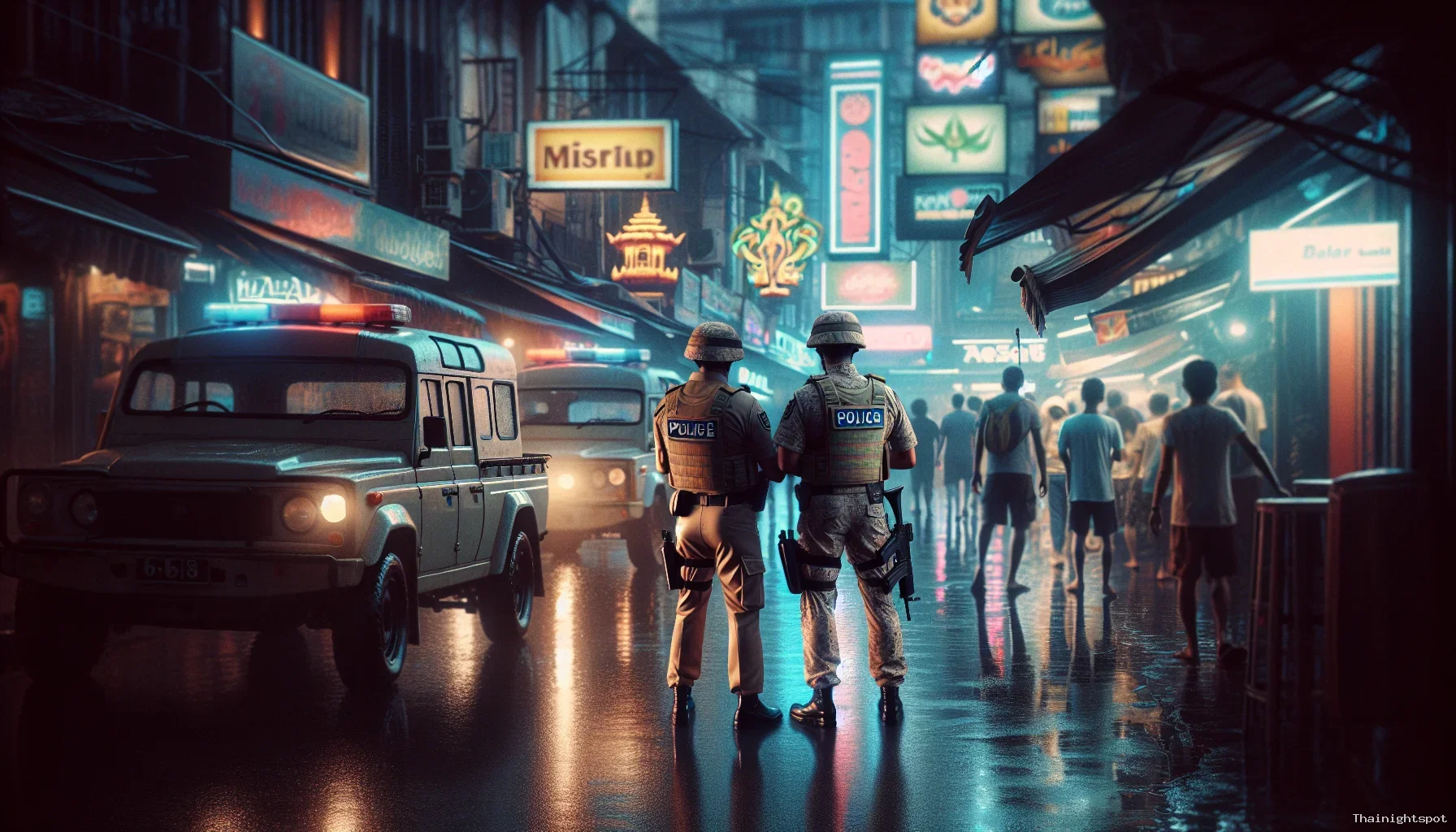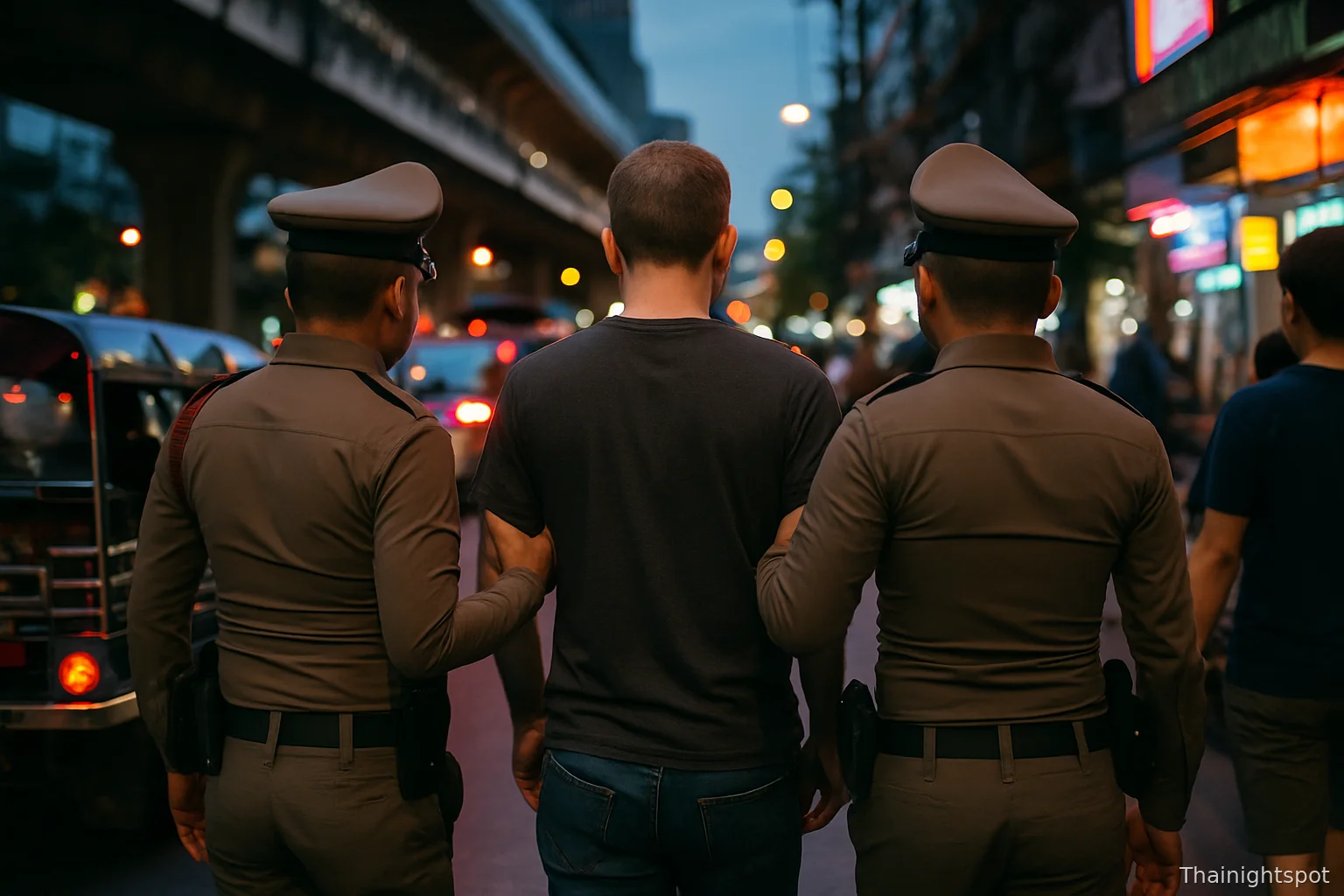
Bangkok has a way of serving up contradiction on the same block. One minute it’s a polished glass tower in Asok, the next it’s immigration police hauling away two French men wanted by authorities back home. A few headlines away, Thailand is again telling the world it wants more tourists, but better ones. And in the background, the country is trying to dress itself up as a regional innovation hub, with returnee Thai entrepreneurs and foreign tech partners pitching in.
That mix of enforcement, ambition, and reinvention says more about Thailand right now than any glossy campaign ever could. The country wants the money that comes with visitors, talent, and investment. It also wants order. Sometimes, as this week showed, those goals meet in the same street.
Interpol targets picked up in Asok
According to Bangkok Post, immigration police arrested two French nationals in Asok on Tuesday. One of them was reportedly listed on an international warrant for alleged involvement in organised crime, drug trafficking, and money laundering. Bangkok Post said both men were wanted by authorities in France.
Asok is not exactly the sort of place people imagine when they hear the phrase “international fugitive.” It’s office towers, hotels, malls, traffic, and the usual Bangkok churn. The kind of district where anonymous foreigners can slip into the crowd, which is also why police pay attention there. In a city this large, the shiny parts and the shadow economy often share the same footpath.
For Bangkok’s visitors, expats, and nightlife crowd, this is a reminder that the city’s openness cuts both ways. It’s easy to disappear here. That’s a selling point for some people and a problem for everyone else. The police know it, and so do the agencies chasing people across borders.
Thailand still wants more tourists, just better spenders
While the arrest story fed the city’s hard edge, Thailand’s tourism machinery kept humming in the opposite direction. According to Nation Thailand, the Ministry of Tourism and Sports is pushing a “Value over Volume” strategy and expects more than 33.2 million foreign tourists in 2026. The message is clear enough: fill the country, but preferably with visitors who stay longer, spend more, and don’t treat Thailand like a bargain-bin free-for-all.
That is the tension at the heart of the sector. Thailand has spent years depending on mass tourism, and mass tourism has a habit of being both lucrative and brutish. It brings jobs, full hotel rooms, and packed bars. It also brings noise, strain, and the occasional mess that ends up on the front page. The new pitch is less about sheer numbers and more about squeezing better value out of each arrival.
For nightlife businesses, that matters. Higher-value tourism usually means more attention to service, safety, and premium experiences. The beer crowd doesn’t disappear, but the state starts talking more about quality, compliance, and image. In plain English: the country still wants the party, but it would like the party to look cleaner in the photos.
Returnee founders and imported tech ambition
That same impulse to upgrade the country’s image shows up in business headlines too. Nation Thailand reported that high-flying Thai expats are returning from global tech capitals to lead startups, bringing international networks and local insight back into Bangkok’s business scene. At the same time, the paper said South Korea has formalised a phased “Innovation Corridor” with Bangkok, with five Korean startups being deployed to help address labour shortages and margin pressures in Thailand’s tourism industry.
On paper, that all sounds neat and tidy. In practice, it’s Bangkok: fast growth, short attention spans, and a constant scramble to make the numbers work. The startup returnees are being sold as bridge-builders, people who understand the outside world but can still function in the Thai one. The Korean angle adds a second layer, suggesting Thailand is no longer just exporting beach holidays and nightlife. It wants a slice of the tech-and-services upgrade too.
There’s a reason these stories belong together. Tourism isn’t just hotels and tour buses anymore. It’s data, labour, logistics, language tools, and the increasingly ugly arithmetic of keeping a service economy profitable. If Bangkok is serious about becoming a smarter destination, it needs more than slogans and soft power. It needs systems that work when the neon shuts off at 2 a.m.
Why this matters on the ground
For tourists, the practical takeaway is simple: Thailand remains welcoming, but not casual about everything. High-profile arrests in central Bangkok show that law enforcement is watching the same international crowds that keep the city busy after dark. That’s not a warning to stay home. It’s a reminder that Bangkok’s freedom has rules, and some of them are enforced with surprising speed when the wrong names surface.
For expats and nightlife operators, the bigger picture is economic. Thailand wants to keep the visitors flowing while moving upmarket, and that means more pressure on businesses to look polished and stay compliant. The country is also trying to sell itself as a place where talent returns, startups grow, and outside partners can plug in. That’s a nice story when it works. When it doesn’t, it’s just another expensive promise in a city that already has too many.
And then there’s the human reality behind the headlines. The people in Asok, the returnees launching startups, the officials chasing targets, the tourists coming for a week and staying for a month — they’re all moving through the same city, just with very different agendas. Bangkok doesn’t separate those worlds. It throws them into the same traffic jam and sees what survives.
The bigger Bangkok story
This week’s mix of arrests, tourism policy, and startup cheerleading points to a Thailand that is trying to tighten its grip without killing the buzz. That is a tricky balance. Too much control and the city loses its edge. Too little, and the problems start making the headlines for all the wrong reasons.
Bangkok has been playing this game for decades. The city survives by absorbing contradictions: glossy and grimy, careful and reckless, local and international, all at once. The question now is whether Thailand can keep that messy appeal while upgrading the machinery underneath it. The answer will matter to everyone who lands here with a suitcase, a business plan, or a bad idea.
Source: Bangkok Post, Nation Thailand, The Thaiger