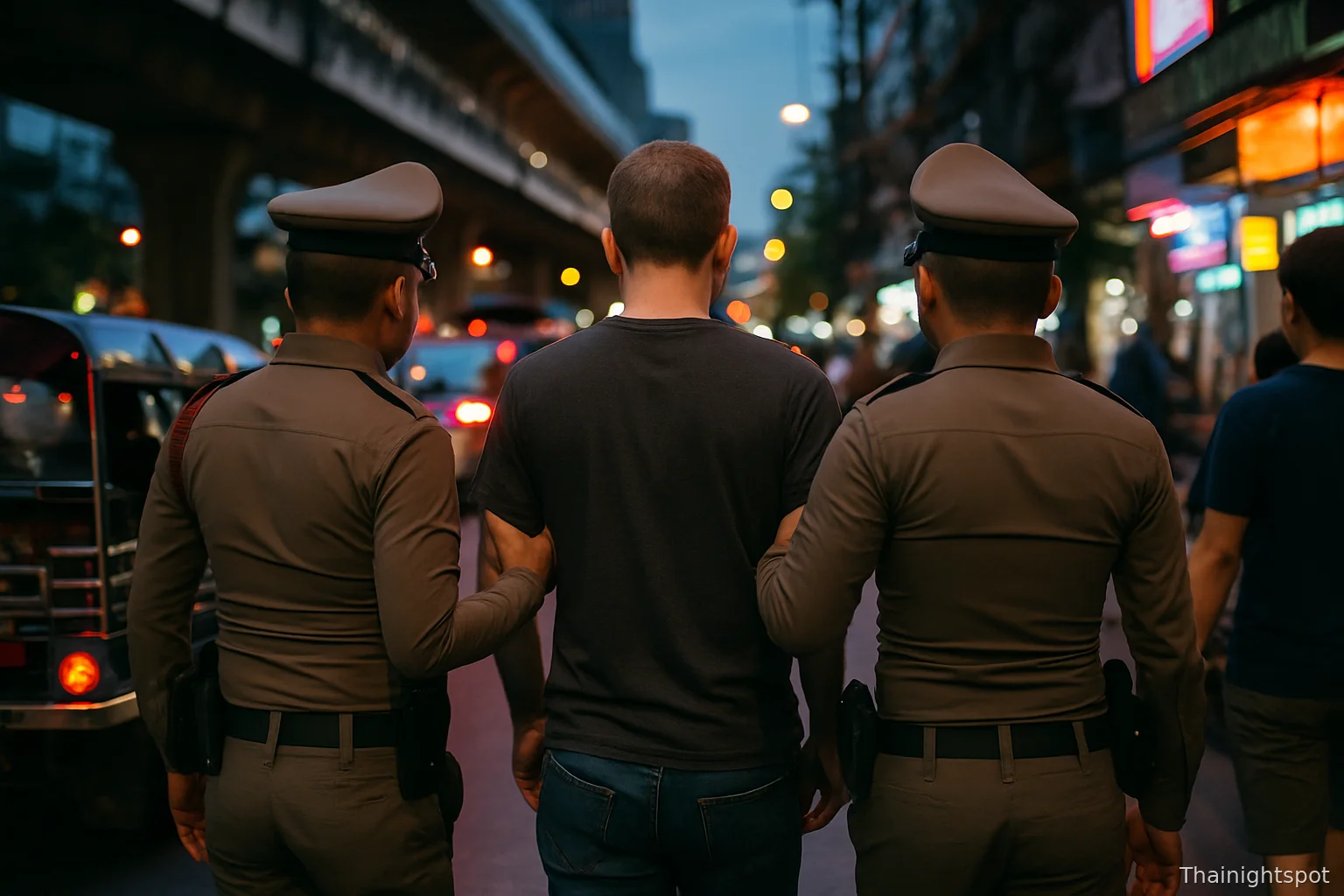
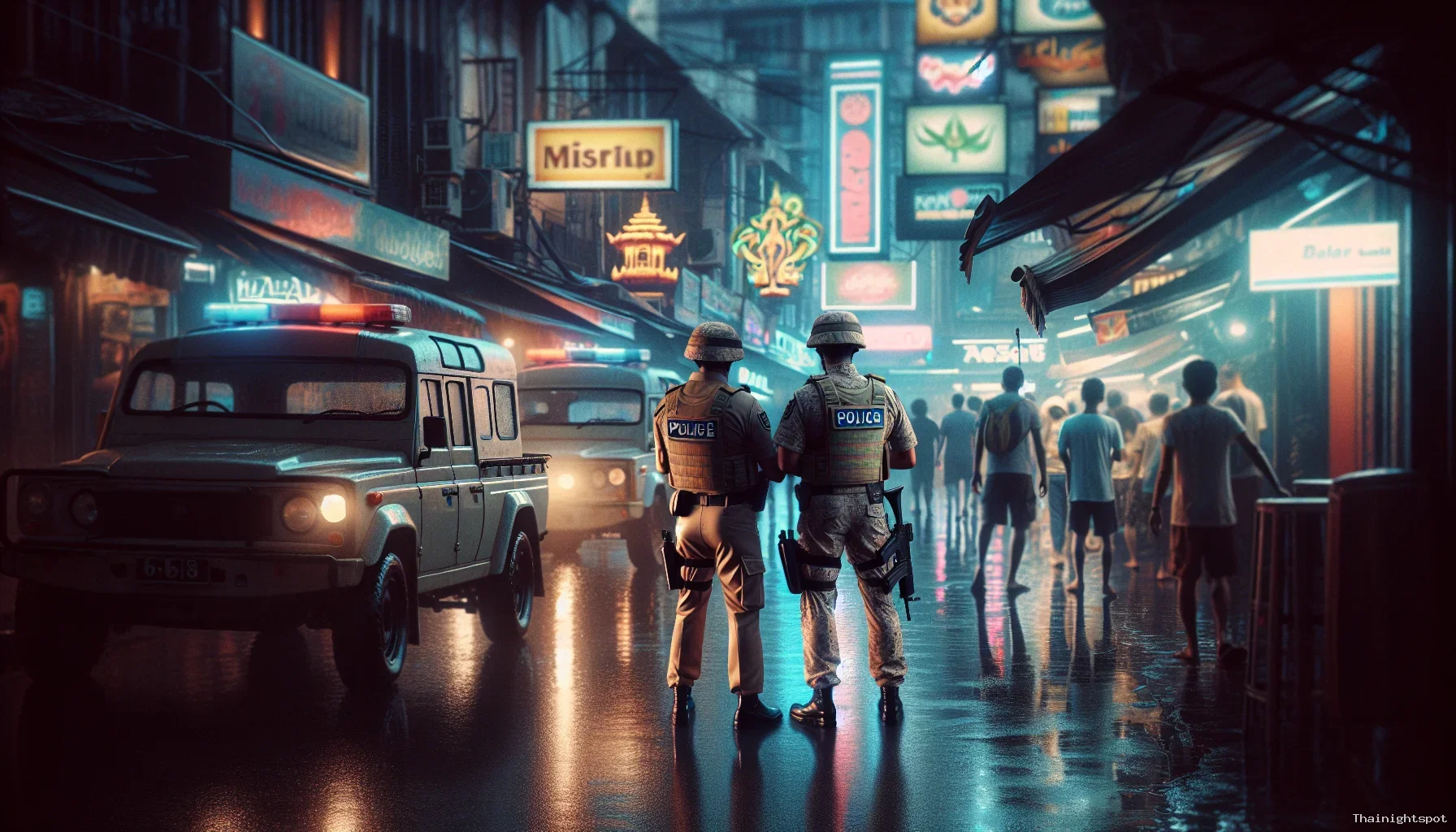
Bangkok has a way of turning up the contrast dial. One minute you’re watching a glossy tourism pitch about quality visitors, startup money, and slick new tech. The next, immigration police are hauling in two French nationals in Asok, with one reportedly wanted on allegations tied to organised crime, drug trafficking, and money laundering. Same city. Same week. Different Bangkok.
That tension is the real story here. Thailand is trying to sell itself as a higher-value destination, a place that can welcome more than 33 million foreign visitors in 2026 without slipping into the old habits of mass tourism at any cost, according to Nation Thailand. At the same time, the kingdom remains a magnet for people on the move for all kinds of reasons: entrepreneurs returning from abroad, foreign tourists chasing nightlife and beaches, and, occasionally, men who would rather not be found.
From the polished hotel lobbies of Sukhumvit to the alleyways where the neon bleeds into the midnight food stalls, Thailand is still trying to do two things at once: look respectable and stay irresistible. That’s not easy. But it’s the game.
Asok arrest puts the spotlight on Thailand’s old problem
According to Bangkok Post, immigration police on Tuesday arrested two French nationals in Asok, one of them reportedly listed on an international warrant. The allegations linked to that target, as reported, included organised crime, drug trafficking and money laundering. The report did not say the men were convicted of anything, only that they were wanted by French authorities.
For Bangkok residents, the location matters as much as the arrest itself. Asok is not some forgotten backstreet border post. It’s one of the city’s busiest commercial areas, packed with offices, condos, bars, and the sort of transient crowd that makes a metropolis feel alive and anonymous at the same time. A place where a man can disappear into the rush hour and a police operation can still land like a cracked bottle on polished marble.
Thailand has spent years battling a reputation as a soft landing for international fugitives, money men, and people hoping that distance plus a passport stamp equals invisibility. The Bangkok arrest does not tell the whole story, but it reminds everyone that the kingdom’s global pull cuts both ways. It attracts tourists, investors, and expats. It also attracts men who think the tropics can blur the paper trail.
Tourism officials want value, not volume
That’s the backdrop to Thailand’s current tourism pitch. Nation Thailand reported that the Ministry of Tourism and Sports is pushing a “Value over Volume” strategy and expects more than 33.2 million foreign tourists in 2026. The phrase sounds tidy enough for a presentation deck, but the idea is simple: fewer bargain-bin headaches, more spend-per-trip, more quality over chaos.
There’s logic in that. Thailand has already lived through the era of floods of visitors, cheap package tours, and the kind of overcrowding that turns paradise into a queue. The current push suggests officials would rather have travellers who stay longer, spend more, and maybe don’t leave the beach looking like a war zone. Whether the country can actually manage that without pricing out the people who made Thailand fun in the first place is another question entirely.
For tourists and nightlife workers alike, the stakes are obvious. A more selective tourism model could mean better-managed districts, cleaner streets, and stronger policing in hot zones. It could also mean higher prices, more rules, and fewer chances for the sort of spontaneous, slightly chaotic Bangkok night that people cross oceans to experience. Thailand has always sold freedom with a side order of control. Getting the balance wrong would be expensive.
Expats are coming home to build, not just to stay
Then there’s the other side of the Thailand story: people returning with money, skills, and a plan. Nation Thailand also reported that high-flying Thai expats are coming back from global tech capitals to launch startups in Bangkok, bringing international networks and local knowledge with them. That’s not just feel-good repatriation. It’s a sign that the city is trying to compete as more than a party stop and a retirement address.
This matters because Bangkok’s economy has always been a strange mix of old money, street-level hustle, and imported ambition. When Thai founders return from overseas, they bring habits learned in places like Singapore, London, or San Francisco, but they also understand the local shortcuts, the family connections, the real rhythm of the city. That combination can be powerful. It can also be messy, which is usually where the interesting businesses live.
For the nightlife and hospitality crowd, a stronger startup scene can mean more money floating into the city, more demand for apartments, bars, co-working spaces, and late-night food. It can also mean a more cosmopolitan Bangkok that keeps evolving rather than becoming a museum of its own clichés. The city has never been short on energy. What it needs is direction, and maybe a few fewer people trying to launder the past through a new business card.
Thailand’s international image is being rebuilt in layers
Zoom out, and the pattern becomes clearer. Thailand is not just receiving tourists; it is rebranding itself around a sharper, more curated identity. That includes tech partnerships, as Nation Thailand reported that South Korea is committing to embed operational AI in Thailand’s tourism industry through a phased innovation corridor with Bangkok. Five Korean startups are being deployed to tackle labour shortages and margin pressures in the tourism sector, according to the report.
That’s the sort of development that might sound abstract until you check into a hotel, order a ride, or try to get a reservation at midnight and discover the whole system now runs on a patchwork of apps, algorithms, and exhausted humans. Thailand’s service economy is modernising whether it wants to or not. AI may not care about the smell of grilled pork drifting through a soi, but it can still change how that soi earns a living.
And yes, there’s an irony here. A country trying to project order, quality, and high-tech confidence is also the same country where the police are still arresting foreign fugitives in the middle of a business district. But that’s Thailand. It’s rarely one thing at a time. The trick, for officials and visitors alike, is understanding that the shiny brochure and the back-alley reality are always sharing the same frame.
Why this matters for travellers, expats and the night crowd
For tourists, especially those who treat Bangkok as the gateway to a longer Thailand run, the message is pretty clear: the country wants your money, but it wants the right sort of money. It also wants fewer headaches. That means more attention to compliance, policing, and image management in the places where visitors are most visible. If you’re the sort of traveller who thinks rules are for other people, you may find Thailand less forgiving than the old myths suggest.
For expats, the story is a little more nuanced. Thailand still offers what it always has: weather, food, convenience, nightlife, and a lifestyle that can feel strangely affordable if your income comes from somewhere else. But the return of Thai founders and the push for better-quality tourism suggest the country is becoming more selective about who gets to thrive here and on what terms. The easy money era is not the only game in town anymore.
And for the people who actually keep the city awake after dark — the bartenders, DJs, hotel staff, street vendors, security guards, drivers, and late-shift cooks — these shifts are not abstract at all. They determine whether the night is busy, profitable, chaotic, or tightly managed. When the government talks about value, someone on the street has to turn that into rent, wages, and survival.
Bangkok has always been a city of doubles: polished and filthy, generous and ruthless, glamorous and exhausted. This week’s mix of an Asok arrest, a tourism reset, returning startup talent, and imported AI says the same thing in different dialects. Thailand is changing. The only question is whether it can keep the soul of the place while cleaning up the edges.
That’s the watchword for the months ahead. More tourists, more scrutiny, more tech, more ambition. And, probably, more surprises in places that still think they’ve seen it all.
Source: Bangkok Post, Nation Thailand, The Thaiger.