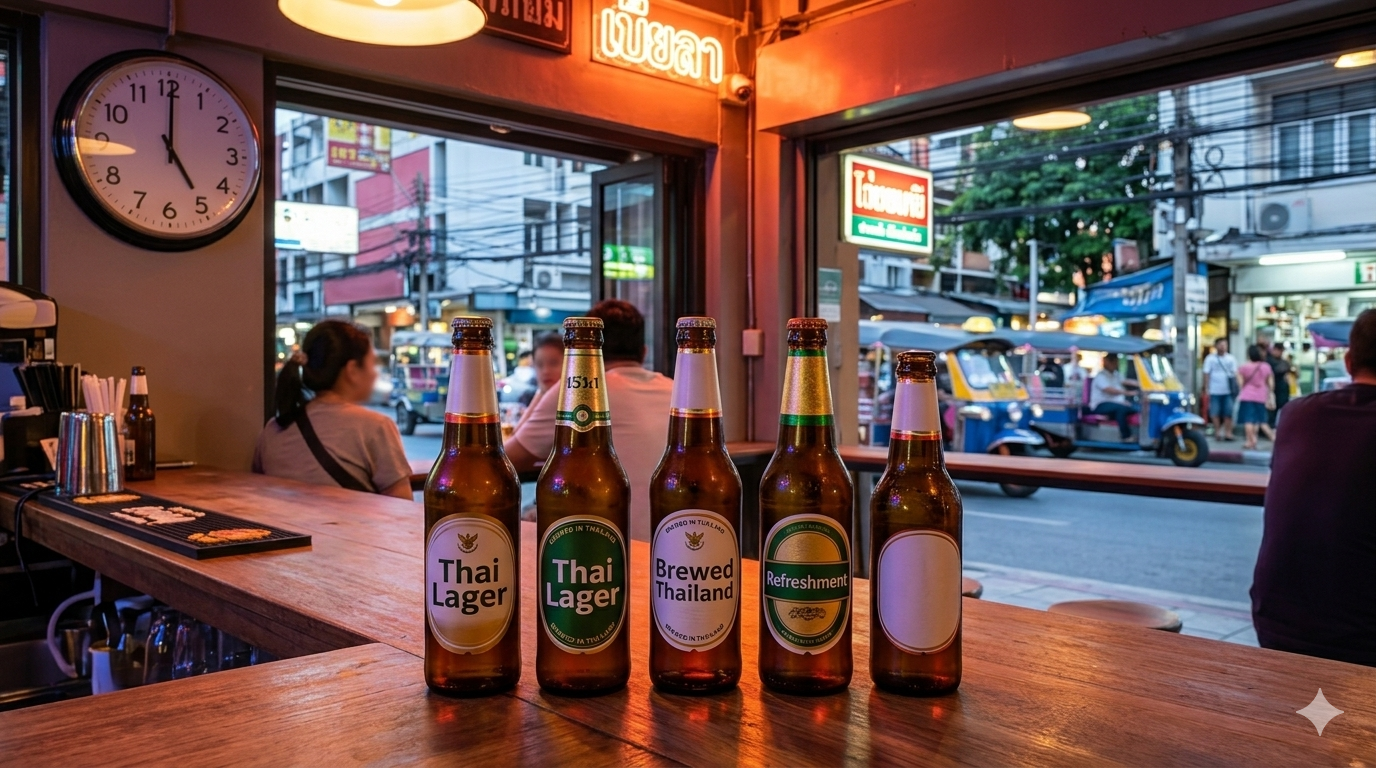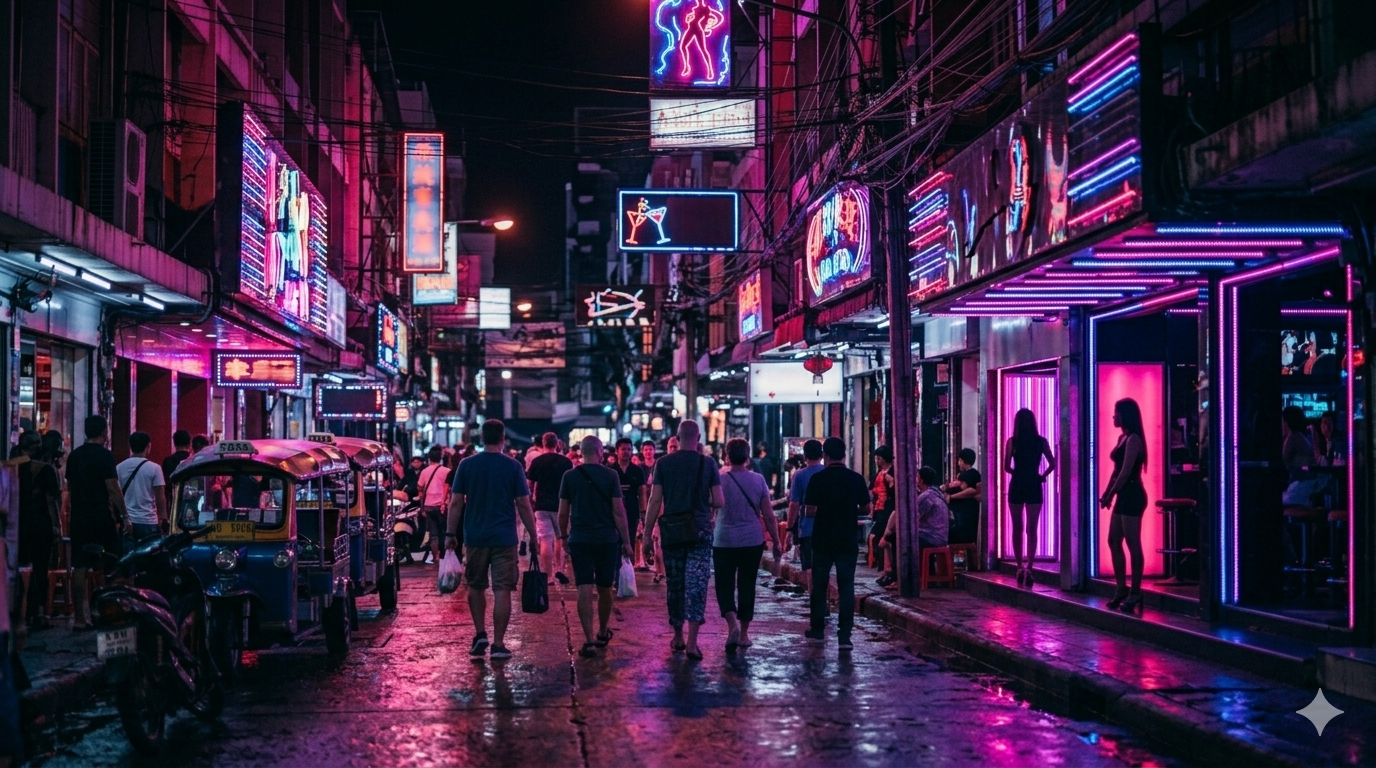
In 2024, the Royal Thai Police reported over 500,000 criminal cases nationwide, with property crimes accounting for 42,330 cases and a 93% resolution rate. While Thailand remains one of Southeast Asia's safest tourist destinations, its nightlife districts have long been fertile ground for a specific category of crime: scams targeting foreign visitors. From the neon-lit alleys of Patpong, which has operated as Bangkok's premier entertainment district since American GIs frequented it during the Vietnam War in the 1960s, to the kilometer-long Walking Street in Pattaya, these schemes have evolved alongside the industry itself.
This investigation examines the most prevalent nightlife scams documented across Thailand's major entertainment zones, drawing on data from the Royal Thai Police, the U.S. Department of State's Overseas Security Advisory Council (OSAC), and field reporting from Thailand's four primary nightlife cities.
The Economics of Nightlife Fraud
Thailand's entertainment and nightlife sector contributes an estimated 1.2 trillion baht annually to the national economy, according to data referenced by the Ministry of Tourism and Sports. With approximately 35.5 million international visitors in 2024, as reported by the Tourism Authority of Thailand (TAT), the industry sustains hundreds of thousands of legitimate businesses. However, the sheer volume of tourist traffic creates opportunities for fraudulent operators, particularly in concentrated entertainment zones where visitors are unfamiliar with local pricing, customs, and legal frameworks.
The U.S. Overseas Security Advisory Council (OSAC) specifically warns in its Thailand Country Security Report that "some entertainment venues, especially in red light districts, try to charge exorbitant prices for drinks or unadvertised cover charges and then threaten violence if the charges are not paid." This pattern is not unique to Thailand but is particularly well-documented here due to the scale of the tourism industry.
Documented Scam Categories
Bill Inflation and Hidden Charges
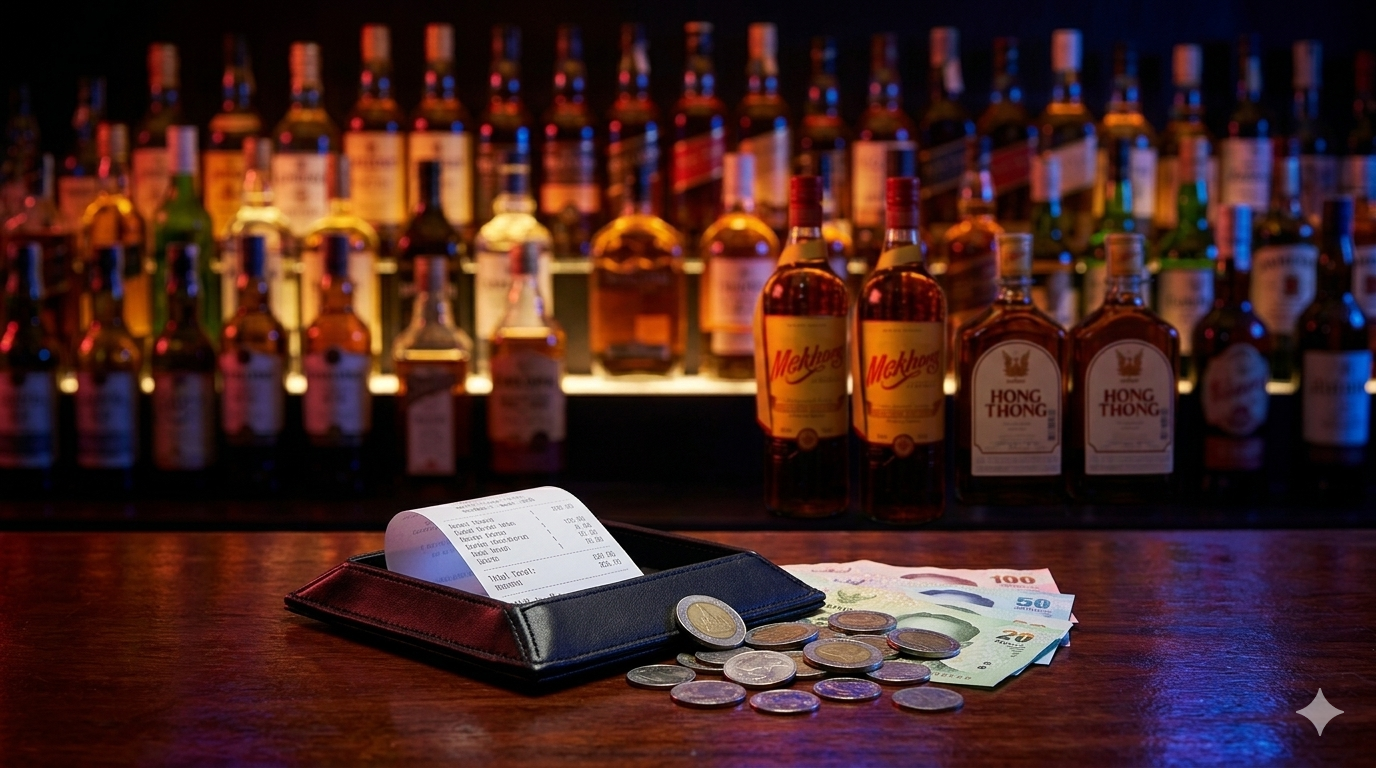
The single most reported nightlife scam in Thailand involves artificially inflated bills. The mechanism is consistent: a patron enters a venue with no visible price list, orders drinks at what appears to be a normal price, and receives a bill that includes undisclosed service charges, entertainment taxes, or drinks never ordered. In some documented cases, bills have exceeded 10,000 baht ($285 USD) for what the patron believed was a 500-baht evening.
The OSAC report notes this practice is concentrated in "red light districts and some other areas frequented by tourists." The Tourist Police Bureau recommends paying per drink rather than running tabs and verifying prices before ordering.
The Upstairs Bar Scheme
This scam has been documented in Patpong since the early 1990s, when the Patpongpanich family transformed the street's sidewalks into a night market, inadvertently creating a new ecosystem of touts directing foot traffic. Street promoters offer "free entry" or "100-baht shows" at upstairs venues. Once seated, patrons face inflated drink prices of 2,000 to 5,000 baht per beverage. Refusal to pay is met with physical intimidation from security staff.
The practice is specifically referenced in the U.S. State Department's crime advisory for Thailand, which states that victims should "pay the price demanded and then seek out a nearby Tourist Police officer for help in getting restitution" rather than attempting to confront the operators directly.
Drink Adulteration
The U.S. State Department has documented cases of tourists being "drugged food and drink, usually offered by a friendly stranger who is sometimes posing as a fellow traveler." The substances used range from common sedatives to scopolamine, a powerful anticholinergic drug. The Thai Ministry of Public Health classifies drink spiking as a public health concern and has issued periodic advisories to hospitals in tourist areas.
Reported incidents cluster around Khao San Road (Bangkok), Full Moon Party venues (Koh Phangan), and late-night establishments in Pattaya where patrons are intoxicated.
Lady Drink Price Escalation
A practice rooted in the bar fine system that has operated across Thailand's entertainment districts since the Vietnam War era. Staff request patrons to purchase "lady drinks," typically non-alcoholic beverages priced at 150 to 300 baht each. While individual purchases are modest, coordinated requests from multiple staff members can generate bills of several thousand baht within an hour. This practice exists in a legal gray zone: it is not technically fraud since prices are usually posted, but the social pressure applied can constitute aggressive commercial practice.
Staged Law Enforcement Encounters
Individuals impersonating police officers approach tourists in entertainment areas, alleging violations ranging from public intoxication to drug possession. They demand immediate cash payment of "fines," typically 5,000 to 30,000 baht. The Royal Thai Police has acknowledged the problem and notes that legitimate officers carry official identification cards (police ID) and will always agree to process matters at a police station.
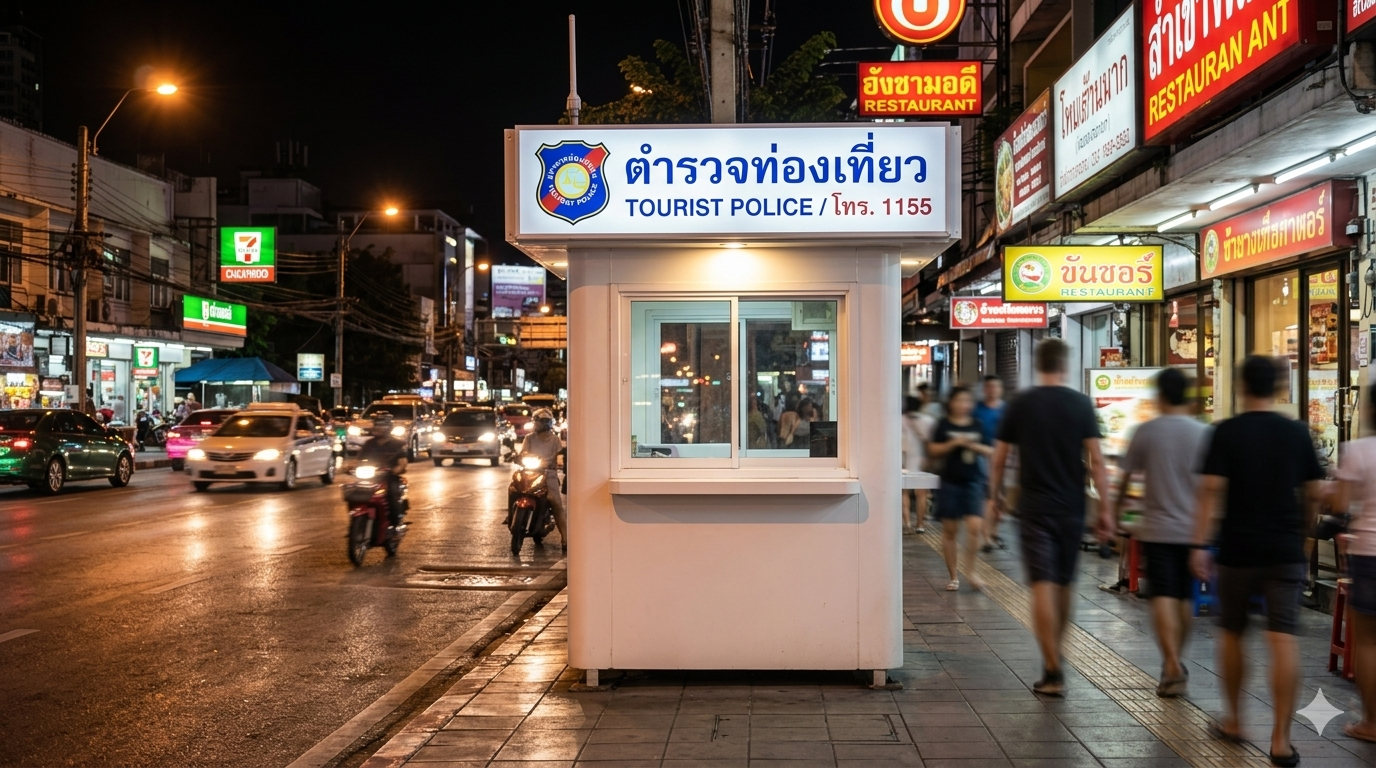
In 2024, the Royal Thai Police established enhanced coordination with the Tourist Police Bureau's 1155 hotline, which operates as what TAT describes as "a centralized hub for solving tourist problems" with "live camera-equipped patrols and constant monitoring from the Emergency Response Centre."
Transport-Linked Venue Steering
Tuk-tuk and taxi drivers in Bangkok and Pattaya offer low-cost or free rides to nightlife areas. The actual business model is commission-based: drivers receive 200 to 500 baht per customer delivered to participating venues, where drink prices are inflated to cover the referral cost. The OSAC report warns that "taxi and tuk-tuk drivers commonly tout entertainment venues" and that "these touts receive kickbacks or commissions that drive up the prices."
The proliferation of ride-hailing apps Grab and Bolt has reduced this scam's prevalence since 2018, but it persists in areas where app coverage is limited or where tourists hail street transport.
Opportunistic Theft in Nightlife Zones
The Royal Thai Police's 2024 statistics show 42,330 property crime cases nationwide. Within nightlife districts, pickpocketing and snatch theft are concentrated in high-density areas: Sukhumvit Soi 4-33 (Bangkok), Beach Road and Second Road (Pattaya), and Bangla Road (Phuket). The U.S. State Department specifically warns that "many U.S. citizens have had passports, wallets, and other valuables stolen" and notes that thieves "cut into purses or bags with a razor and remove items surreptitiously."
A distinct variant involves groups approaching intoxicated tourists with physical contact (hugs, handshakes) while confederates extract wallets, phones, or jewelry.
ATM and Card Fraud
The Bank of Thailand has documented increased card skimming activity in tourist zones. Devices attached to ATMs near entertainment areas capture card data during after-hours withdrawals when tourists need cash. Cybercrime cases in Thailand increased 15% year-over-year in 2023, with the Royal Thai Police reporting over 30,000 online and cyber fraud cases in 2024.
Dual-Tier Pricing Systems
Some establishments maintain separate menus with different prices for Thai and foreign customers. While dual pricing is a long-standing practice at government-operated attractions (national parks, temples), its application in private nightlife venues operates in a legal gray area. Price differentials of 100 to 300% have been documented at venues across tourist-heavy areas.
Vehicle Rental Damage Claims
The U.S. State Department reports receiving "many reports of renters having been charged exorbitant amounts for damage to jet skis or motorbikes, even in instances where the renter had caused no visible damage." A related variant involves the vehicle being reported "stolen," with the rental operator demanding two to three times the vehicle's value as compensation. The State Department explicitly warns travelers "not to use your passport as a deposit or collateral."
Institutional Response and Tourist Protection
Thailand has developed one of the most comprehensive tourist protection frameworks in Southeast Asia. The Tourist Police Bureau, a dedicated unit within the Royal Thai Police, operates the 1155 hotline with multilingual operators available 24/7. In late 2024, the bureau launched a mobile application offering GPS tracking, live chat with officers in five languages, real-time risk area mapping, and incident recording with instant translation.
The Ministry of Tourism and Sports operates the Tourist Assistance Center (TAC), responsible for coordinating complaint resolution and publishing safety statistics. The TAC works alongside the Tourism Authority of Thailand, which has implemented venue certification programs in major entertainment zones.
Free on iOS, Android, and Huawei. Features include emergency 1155 connection with GPS tracking, live chat in 5 languages, real-time risky area alerts, and incident reporting with automatic translation. The app represents the most comprehensive digital tourist protection tool deployed by any ASEAN nation.
Emergency Contacts
- Tourist Police Hotline: 1155 (24/7, multilingual, free from Thai SIM)
- Emergency Services: 191 (Thai-language primary, English available)
- Ambulance: 1669 (National emergency medical service)
- Tourist Police App: Free download, GPS tracking, live chat in 5 languages
- Tourist Assistance Center: Ministry of Tourism and Sports, Bangkok
Sources & References
Tourist Police Bureau, Royal Thai Police
Tourism Authority of Thailand (TAT)
Ministry of Tourism and Sports
Royal Thai Police
Ministry of Public Health
Bank of Thailand
U.S. Overseas Security Advisory Council (OSAC)
U.S. Department of State - Thailand Crime Information
Government Public Relations Department, Thailand
Royal Thai Police 2024 Annual Crime Statistics (500,000+ cases, 93% resolution rate)
TAT International Visitor Arrivals 2024 (35.5 million)
NESDC Crime Rate Data 2017-2023 (via Statista)
Thailand Crime Rate Index 2024: 37.5 (Numbeo)