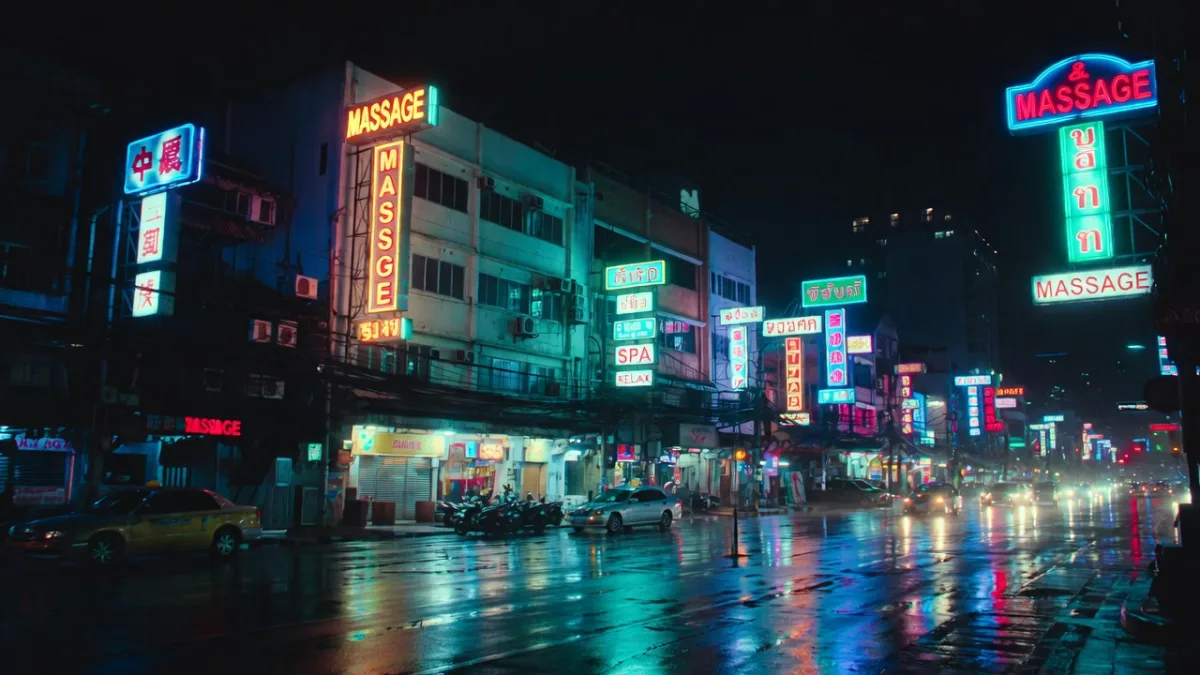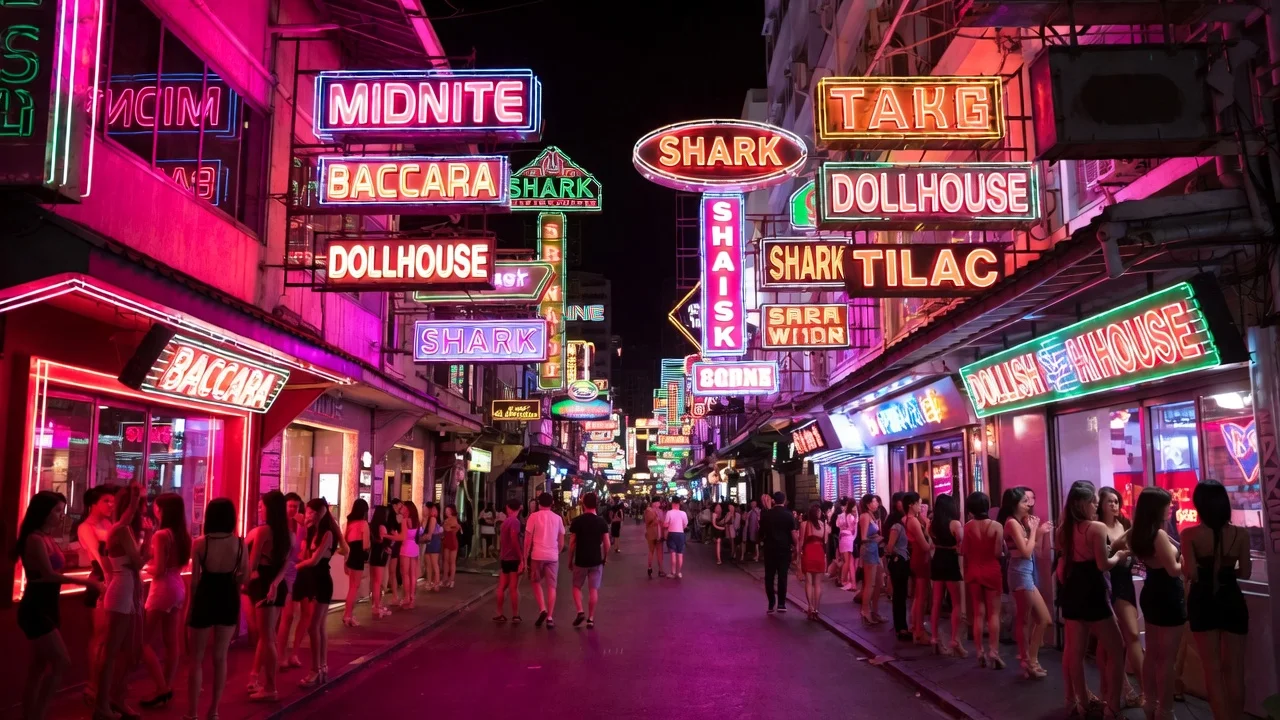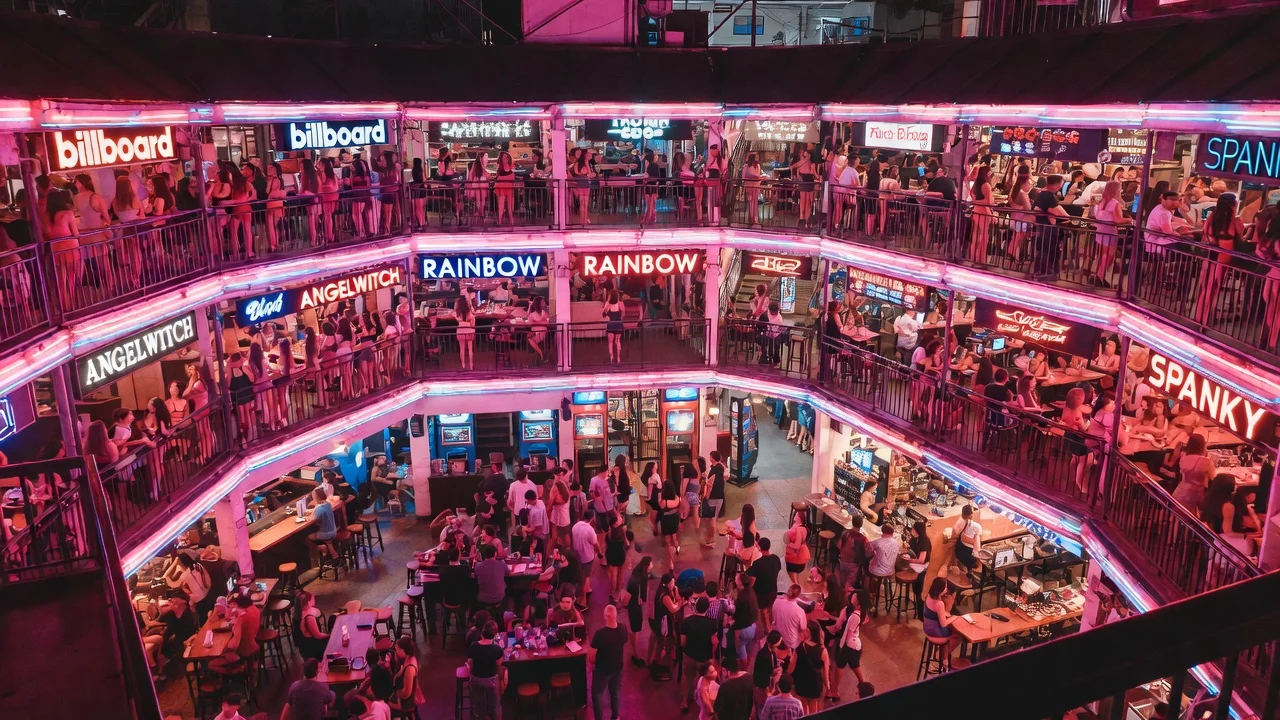
It's 6:47 PM on a Tuesday and the neon hasn't kicked in yet. Nana Plaza, that three-storey monument to bad decisions and excellent capitalism on Sukhumvit Soi 4, is still in its pre-game phase — cleaners pushing mops across tiles, a security guard checking his phone, two bartenders sharing a cigarette by the south elevator. In thirteen minutes the ground-floor beer garden will start filling up. In three hours you won't be able to move. I'm here because I wanted to understand how a Gujarati textile merchant's family land became, by most accounts, the single most concentrated adult entertainment venue on the planet. And I wanted to hear it from the people who actually keep the lights on.
The Name on the Building
First, some context — because most visitors never bother asking why this place is called "Nana."
The name traces back to Ahmed Ebrahim Nana, a Gujarati Muslim merchant who left India for Siam in the 1890s during the reign of King Rama IV. The family sold Indian textiles to the Royal Palace, did well enough to earn a noble title — Phra Phichet Sanpanit — and eventually pivoted into what every smart family in Bangkok pivoted into: land.
The most prominent Nana was Lek Nana (1924–2010), who co-founded Thailand's Democrat Party after World War II, served as Deputy Foreign Minister under PM Seni Pramoj in 1975, and later became Minister of Science, Technology, and Energy. He also sat on the Central Islamic Committee of Thailand. The family's property portfolio along Sukhumvit was enormous — Soi 3 (Nana Nuea), Soi 4 (Nana Tai), the BTS station, the intersection — all named after them. Their wealth was further anchored by a significant stake in Siam Cement Group, one of Thailand's largest industrial conglomerates. Sak Nana, a family scion, held roughly 6.7 million shares, valued at over three billion baht.
So yes: a devout Muslim family of Indian origin, with a royal title and a cement fortune, inadvertently gave their name to what would become Bangkok's most notorious red-light district. History has a sense of humour.
Source: Ministry of Tourism and Sports, Thailand; Bank of Thailand
Before the Neon: A Shopping Centre and a Beer
In the late 1970s, someone built a modest U-shaped shopping centre on Nana family land at Soi 4. Shops, restaurants, a place for locals and the growing expat crowd to buy things and eat lunch. This was before Sukhumvit became the six-lane river of taxis and 7-Elevens it is today — the road had only been paved since 1936, and until the Vietnam War pumped American military money into the neighbourhood in the 1960s, much of it was still rice paddies.
Around 1980, a small open-air beer bar called Lucky Lukes set up shop outside the shopping centre entrance. One bar. One sign. That was it. A snooker hall opened on the third floor. A Lebanese restaurant on the ground level. Then a few go-go bars appeared, and by 1983 — the year most sources cite as the plaza's official opening as an entertainment venue — the shops were losing the battle. Twenty go-go bars by the mid-1980s. Thirty-nine entertainment venues by 2002. Lucky Lukes, in a move that perfectly captures Bangkok's rolling sense of reinvention, eventually became a cannabis shop.
Meet the Landlord
I'm sitting across from James — not his real name, at his request — who has worked in Panthera Group's property management division since 2014, two years after the company took over Nana Plaza's lease. He's Australian, mid-forties, wearing a polo shirt that probably cost more than my flight here. He speaks with the measured calm of a man who has explained the same facts to a hundred journalists and knows exactly which details to volunteer and which to let me dig for.
TNS: Walk me through the 2012 deal. The plaza was sold for — what was it — twenty-five million?
James: Approximately. The land had been inherited by seven sisters from the Nana family. And look, they were very clear — they didn't want the association. It's a conservative Muslim family. So when Panthera and Fico Corporation came in through Nana Partners Co Ltd., the family was happy to move on. Panthera became the landlord, the operator, the security provider — the whole thing.
TNS: What was the state of the place when you took over?
James: Honestly? It was falling apart. The electrics were dangerous. No proper security system. No lifts — well, one dodgy one. The flooring was cracked. It had the charm of a building that hadn't been properly maintained since the nineties. First thing we did was rip out the entire electrical infrastructure. That alone was about ten million baht. Then CCTV cameras, professional security staff, new flooring, two proper elevators. In 2018 we put the roof canopy over the courtyard — eighteen million baht — because half the year it rains every afternoon and people were getting soaked walking between bars. That was a game-changer.
TNS: The leases here are twelve years. That's unusual for this industry.
James: Very unusual. Most bars in Bangkok operate on short leases or month-to-month agreements. We wanted operators to invest in their venues — proper fitouts, sound systems, staff training. You don't do that if you think your landlord might not renew next year. Twelve years gives people room to build a real business.
Source: Nana Plaza Official; Wikipedia; Bangkok Post; Panthera Group
Meet the Operator
Downstairs, on the second floor, I find Lek — also not his real name, and no relation to the politician, though he laughs when I ask. He's Thai-Chinese, fifty-something, and has operated a go-go bar in Nana Plaza since 2004. He's seen the pre-Panthera days, the renovation, the good years, the catastrophe of COVID, and the recovery. He's drinking a Singha and it's not his first.
TNS: You've been here twenty-one years. What's the biggest change?
Lek: [laughs] Air conditioning works now. No, seriously — before Panthera, this place ran on hope and extension cords. I lost power in my bar maybe twice a month. Now everything is proper. Security cameras everywhere. Some of the old guys complain about that, but I say good. It's safer for the girls, safer for the customers, safer for me.
TNS: How does the money work? For someone who's never been here — break it down.
Lek: Okay. A customer walks in, sits down, orders a beer — maybe 150, 180 baht depending on the bar. If he wants company, he buys a "lady drink" for one of the girls — that's 150 to 250 baht. The girl gets a cut of that, maybe 50–80 baht. If he wants her to leave with him, he pays a "bar fine" to the bar — 500 to 1,000 baht, depending on the time. After that, whatever happens is between them. That's the system. It's been the system since the 1980s.
TNS: And the girls — what do they earn?
Lek: Base salary is low. Maybe five, six thousand baht a month from the bar. Tips and bar fines are where the real money is. A good month, a popular girl can make 30,000, 40,000 baht. A slow month, much less. Most of my staff are from Isan — Udon Thani, Khon Kaen, Nong Khai. Single mothers, most of them. They're sending money home to families. People want to moralize about this industry, and I understand that, but they should come here and talk to the women first. Ask them what their other options were.
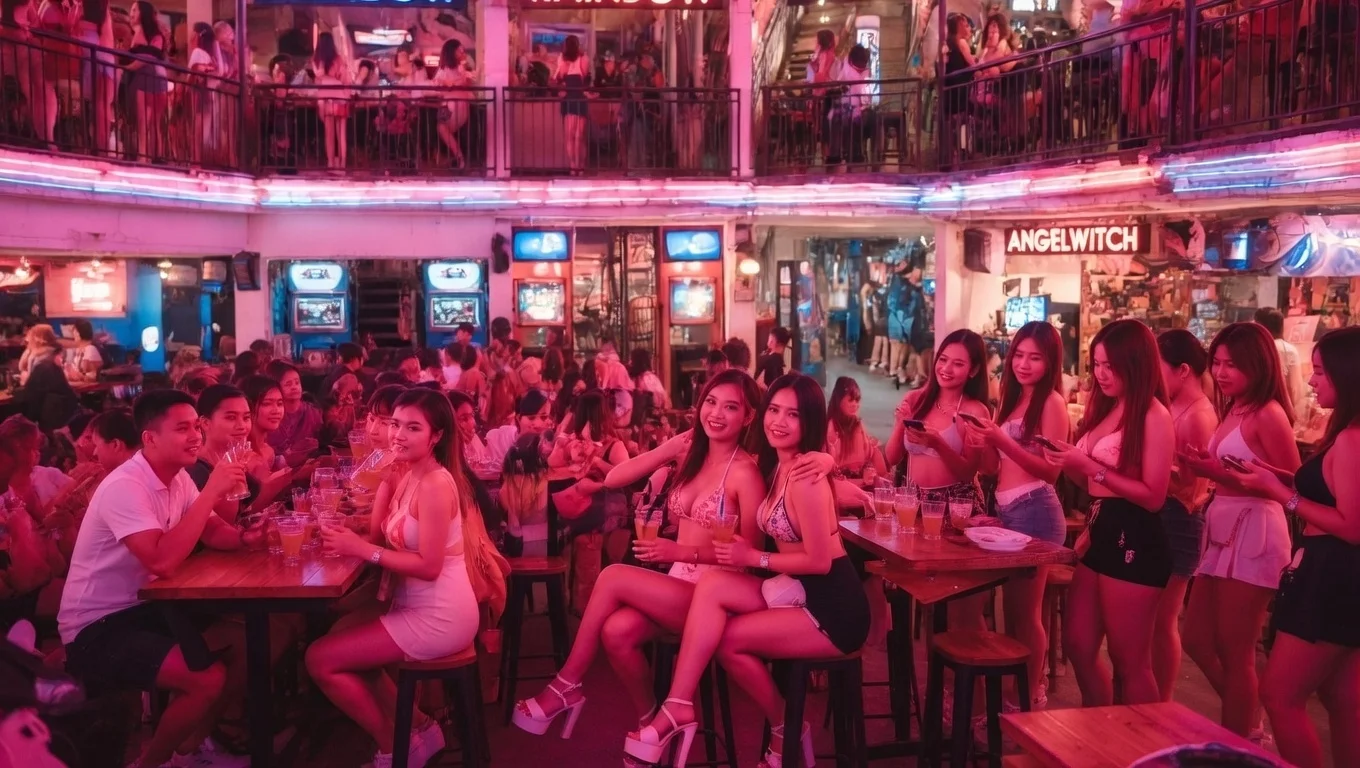
The ground-floor beer garden at Nana Plaza — the three-story horseshoe complex houses approximately 40 venues across all levels.
The ground-floor beer garden at Nana Plaza — the three-story horseshoe complex houses approximately 40 venues across all levels.
The Numbers
Some context for the tourism economy Nana Plaza sits inside. In 2024, Bangkok welcomed 32.4 million international visitors — making it the world's most-visited city for the umpteenth year running, according to Mastercard's Global Destination Cities Index. Those tourists spent over ฿1.22 trillion (roughly US$35 billion). Tourism contributes approximately 18% of Thailand's GDP and supports nearly 8 million jobs directly and indirectly.
Nana Plaza's share of that? Impossible to quantify precisely. But with roughly 30 bars averaging — let's be conservative — 200 customers per night spending an average of 1,500 baht each, you're looking at 9 million baht moving through this single building on a busy night. That's about US$260,000. Every night. In a structure smaller than most suburban supermarkets.
Source: Ministry of Tourism and Sports; Bank of Thailand; Statista
COVID: The Lights Go Out
In March 2020, Nana Plaza went dark. Not dimmed, not quiet — dark. The Thai government ordered entertainment venues closed, and they stayed closed, in various configurations of restriction, for the better part of two years. International tourist arrivals collapsed from 39.9 million in 2019 to 6.7 million in 2020 and a catastrophic 430,000 in 2021.
TNS: What was that like?
Lek: Like someone turned the city off. One day you're doing 300 customers a night, the next day — nothing. And not just for a week. For months. Then more months. My staff — I had 22 girls and 4 bar staff — they had no income. No savings. Most of them went back to Isan. Some of them I never saw again.
TNS: James, the Panthera charity effort during COVID — about a million dollars?
James: That's the approximate figure across the full period. We did multiple rounds. The big May 2021 distribution was 5,000 kilos of rice, over 40,000 eggs, 6,000 tins of canned food, 20,000 packs of instant noodles, cooking oil, baby powder, diapers — remember, most of these women have children. We'd done a similar round in January 2021 during the second wave. And we slashed rents for tenants who stayed. We also delivered 5,000 litres of alcohol to Bangkok hospitals — for sanitisation, to be clear, not for morale.
[Lek, from across the table: "Although morale would have been fine too."]
TNS: When bars reopened — what was the first night like?
Lek: Sad, actually. We opened the doors and... maybe twenty people came. Mostly local expats. No tourists — they weren't back yet. We had more staff than customers. I remember standing at the balcony looking down at the empty courtyard thinking, "Is this it now? Is it over?" But then 2023 came and the tourists came back. By Songkran 2024 we were almost back to normal. Almost.
The Three-Storey City
For orientation: Nana Plaza occupies a three-storey U-shaped building in the Khlong Toei District, about 300 metres from BTS Nana Station. The structure faces west onto Soi 4, with a central courtyard (now covered by the 2018 roof canopy) surrounded by bars on all three levels. There are two elevators and the whole thing shuts down around 2–3 AM daily.
Ground floor: the beer garden in the centre — this is the social hub, the place where people who aren't sure what they're doing yet sit with a Singha and watch the neon. Surrounding it are several go-go bars and beer bars with a relatively low-key atmosphere. This is where first-timers land.
Second floor: the main event. Higher-profile go-go bars, themed venues, and as of 2019, seven kathoey (ladyboy) bars including Casanova, Temptations, and DC-10. Angel Witch, probably the plaza's most internationally recognised bar, runs elaborate stage shows that have been drawing crowds since the late 1990s.
Third floor: quieter, more niche. Some smaller bars, the short-time hotels (rooms rented by the hour — you know what they're for), and a slightly less frenetic energy. Lek tells me the third floor is "where you go when you've already made up your mind."
[VIDEO: Nana Plaza — embed YouTube ID via admin]
The Legal Fog
Here's the thing nobody wants to say clearly, so I will: prostitution is illegal in Thailand. The Prevention and Suppression of Prostitution Act B.E. 2539 (1996) says so. And yet Nana Plaza — along with Soi Cowboy, Patpong, and a thousand other venues across the country — operates openly, every night, with the full knowledge of police, government, and every guidebook published in the last forty years.
The mechanism is the Entertainment Place Act B.E. 2509 (1966), which licenses venues as establishments serving alcohol with live entertainment. The go-go bars are licensed as entertainment venues. The bar fine system — paying a fee so a worker can leave the premises — exists in a legal grey area that everyone involved understands and nobody officially acknowledges. Police raids happen periodically, but they target drugs, underage entry, curfew violations, and immigration offences. The bar fine? That's just how things work.
TNS: Does it ever worry you? The legal ambiguity?
Lek: I've been doing this for twenty-one years. In that time I've seen maybe five or six raids in my bar. Always about the same thing — checking IDs, checking work permits, looking for drugs. Never about the bar fines. Never. The system works because everyone benefits from it working. The government gets taxes, the police get... well, you can guess, the tourists spend money, the girls support their families. The day someone figures out a better system, I'm all ears. Until then, this is what we have.
The Neighbourhood
Nana Plaza doesn't exist in a vacuum. Step outside and Soi 4 is its own ecosystem — beer bars on both sides of the street, massage parlours, short-time hotels mixed in with regular tourist hotels, street food vendors selling ba mee moo daeng at 2 AM. Walk one block north to Soi 3 and you're in Bangkok's Arab quarter — shawarma shops, Arabic signage, halal restaurants — a product of decades of Middle Eastern medical tourism to nearby Bumrungrad International Hospital, one of Southeast Asia's largest private hospitals.
The area also includes some of Bangkok's most expensive real estate. The Park Hyatt, JW Marriott, and Conrad are all within walking distance. A studio condo on Soi 4 will run you 5–6 million baht. The BTS Nana Station, opened in 1999, made all of this possible by connecting what was once a hard-to-reach entertainment strip to the rest of the city.
It's a neighbourhood where a woman in a hijab buying groceries and a tourist in a Hawaiian shirt looking for a go-go bar can pass each other on the same pavement without either finding it remarkable. Bangkok is good at that.
Visitor Basics
For the uninitiated, here's what you actually need to know:
Getting there: BTS Nana Station, walk south on Soi 4, about 300 metres. You can't miss it — there's a massive illuminated sign. Motorcycle taxis from BTS Asok take about 5 minutes.
Hours: 7 PM to 2–3 AM, nightly. No cover charge to enter the plaza itself. You must be 20 or older.
Prices (2026): Domestic beer ฿120–180. Imported beer ฿180–280. Cocktails ฿200–350. Lady drinks ฿150–250. Bar fines ฿500–1,000. For city-by-city price comparisons, see our Thailand nightlife prices guide.
The golden rule: Check the menu before you order. Always. Drink-price scams are less common here than at Patpong, but they happen. If someone quotes you a price that sounds insane, it is insane, and you should leave. More detail in our scam survival guide.
Transport home: Grab or Bolt. Do not negotiate with tuk-tuk drivers outside Nana Plaza at 2 AM unless you enjoy paying 500 baht for a 60-baht ride.
Last Call
It's 11:30 PM now and the plaza is at full roar. Bass thumping from Angel Witch on the second floor. The beer garden is packed — German, Japanese, Australian, Thai, a few nationalities I can't identify. A girl on the third-floor balcony waves at someone below and laughs. A security guard gently redirects a too-drunk tourist toward the exit.
TNS: Last question. Nana Plaza has survived the Asian Financial Crisis, a tsunami, multiple coups, COVID. Why does it keep going?
James: Because it fills a need that doesn't go away. You can have opinions about what that need is, but the demand hasn't decreased in forty years. If anything, it's grown.
Lek: [finishes his Singha] Because Bangkok is Bangkok. People come here for a reason, and it's not the temples. Well, not only the temples. This building has been here since I was a child. It'll be here after I'm gone. Some things in this city don't change. The traffic. The heat. And Nana Plaza.
He orders another beer. The neon does its thing. Somewhere on the ground floor, a terrible cover of "Hotel California" starts up. I take that as my cue.