Of all the massage formats available in Thailand, nuru massage has the most interesting origin story — one that begins not in Bangkok but in the red-light district of a Japanese industrial city, involves a slippery gel made from edible seaweed, and eventually traveled thousands of kilometers to become one of the most requested services in Thai adult massage parlours.
Japanese Origins: From Kawasaki to the World
The word "nuru" (ぬる) is Japanese for "slippery" — an apt description of the technique's defining characteristic. According to Wikipedia and multiple historical accounts, nuru massage emerged in the 1990s in Yokohama, associated with Japan's "soapland" establishments. Other sources trace its origins to the red-light district of Kawasaki, an industrial city south of Tokyo, during the mid-to-late 20th century.
The development of nuru massage was closely tied to Japan's legal landscape. The Anti-Prostitution Law of 1956 (enforced from 1957) prohibited the exchange of sexual intercourse for money but left a legal gray area for other forms of physical contact. Japan's soapland industry exploited this ambiguity by offering bathing and body-contact services that stopped short of the legal definition of prostitution. Nuru massage represented a further innovation within this framework — a technique that maximized sensory intensity through full-body sliding contact without necessarily crossing legal boundaries.
The gel that gives nuru massage its character is traditionally made from nori seaweed — the same edible seaweed used in Japanese cuisine, particularly sushi. Nori has been cultivated and consumed in Japan since at least the 8th century, with the earliest recorded references appearing in the Taiho Code of 701 CE. When mixed with warm water, nori extract creates a translucent, odorless, water-soluble gel with an extremely slippery texture. Modern commercial nuru gels often use sodium polyacrylate as a substitute or supplement to natural seaweed extract.
Arrival in Thailand
Nuru massage began appearing in Thailand during the early 2010s, initially as a premium offering at a handful of Bangkok massage parlours that catered to Japanese expatriate clients. The technique filled a gap in the market — it offered something distinct from the established Thai soapy massage format, with a different tactile sensation (gel versus soap), different equipment (vinyl sheets or inflatable mattresses rather than bathtubs), and different cultural associations.
Thai entrepreneurs quickly recognized the commercial potential. By the mid-2010s, dedicated nuru massage venues had opened across Bangkok, often combining nuru with soapy massage in hybrid service menus. The adaptation process involved more than simply importing a Japanese technique — Thai establishments modified the experience to incorporate elements of Thai hospitality and service culture, creating what is essentially a Thai-Japanese fusion format.
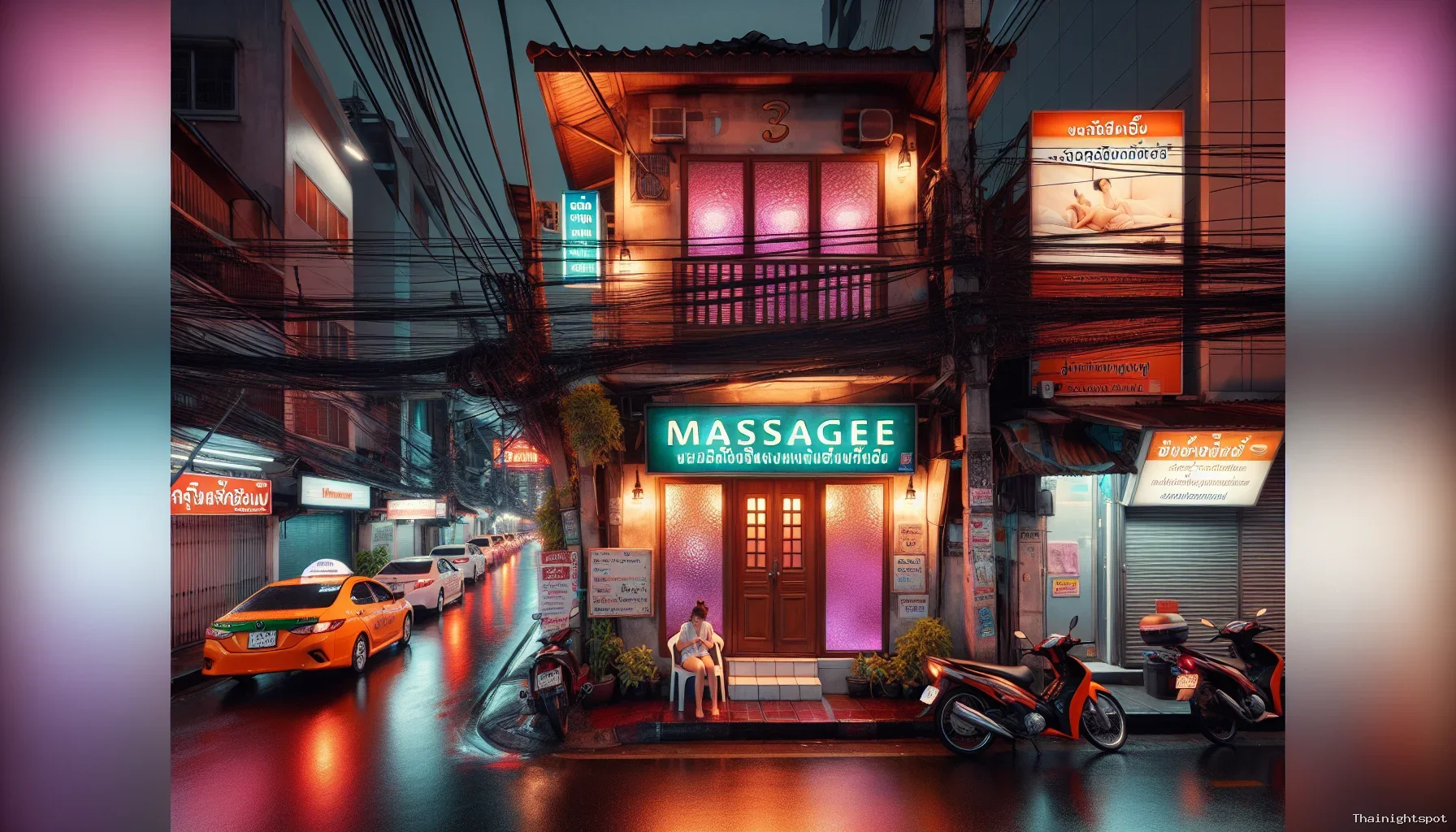
Today, nuru massage is available at dozens of establishments in Bangkok alone, ranging from boutique venues on Sukhumvit to larger operations in the traditional massage parlour districts. The format has also spread to Pattaya, Phuket, and Chiang Mai, though Bangkok remains the primary market.
How Nuru Massage Differs from Soapy Massage
While both nuru and soapy massage involve full body-to-body contact, the two formats differ in several important ways:
Lubrication: Soapy massage uses warm water and body wash or soap, creating a bubbly, sudsy experience. Nuru massage uses a thick, translucent gel derived from seaweed extract, producing a smooth, gliding sensation with significantly less friction than soapy water.
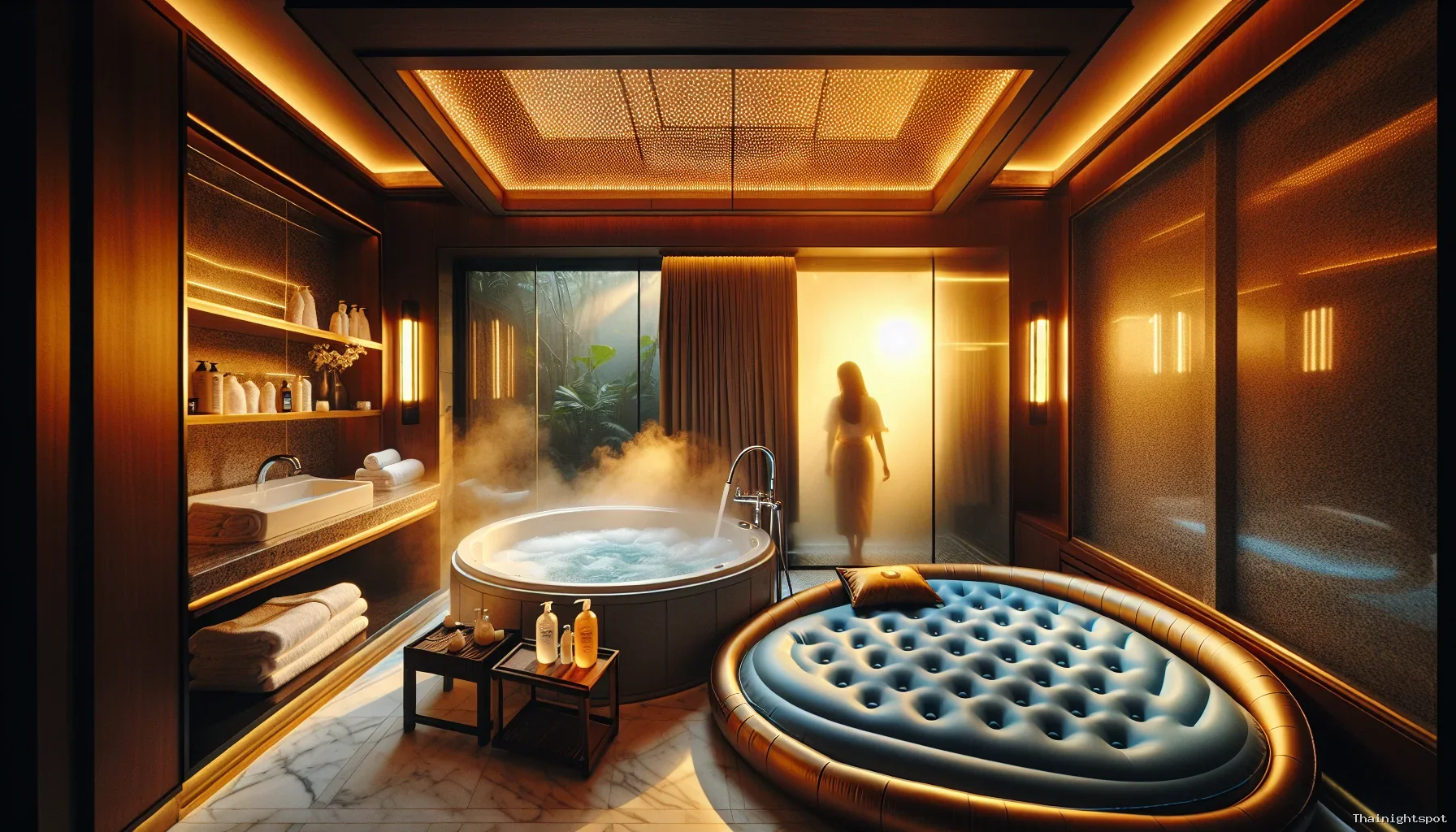
Surface: Soapy massage typically begins in a bathtub or jacuzzi before moving to an inflatable mattress. Nuru massage is performed primarily on a vinyl sheet or specialized air mattress designed to retain the gel and facilitate sliding.
Venue scale: Traditional soapy massage parlours tend to be large, multi-story establishments with dozens or hundreds of therapists. Nuru massage venues in Thailand trend smaller and more boutique-oriented, with typically 15-30 therapists.
Cultural origin: Soapy massage is Thai in origin and deeply embedded in Thai entertainment culture. Nuru massage is a Japanese import that has been adapted to the Thai context.
Pricing: Nuru massage generally commands a modest premium over standard soapy massage, reflecting its positioning as a newer, more specialized offering.
The Nuru Massage Experience
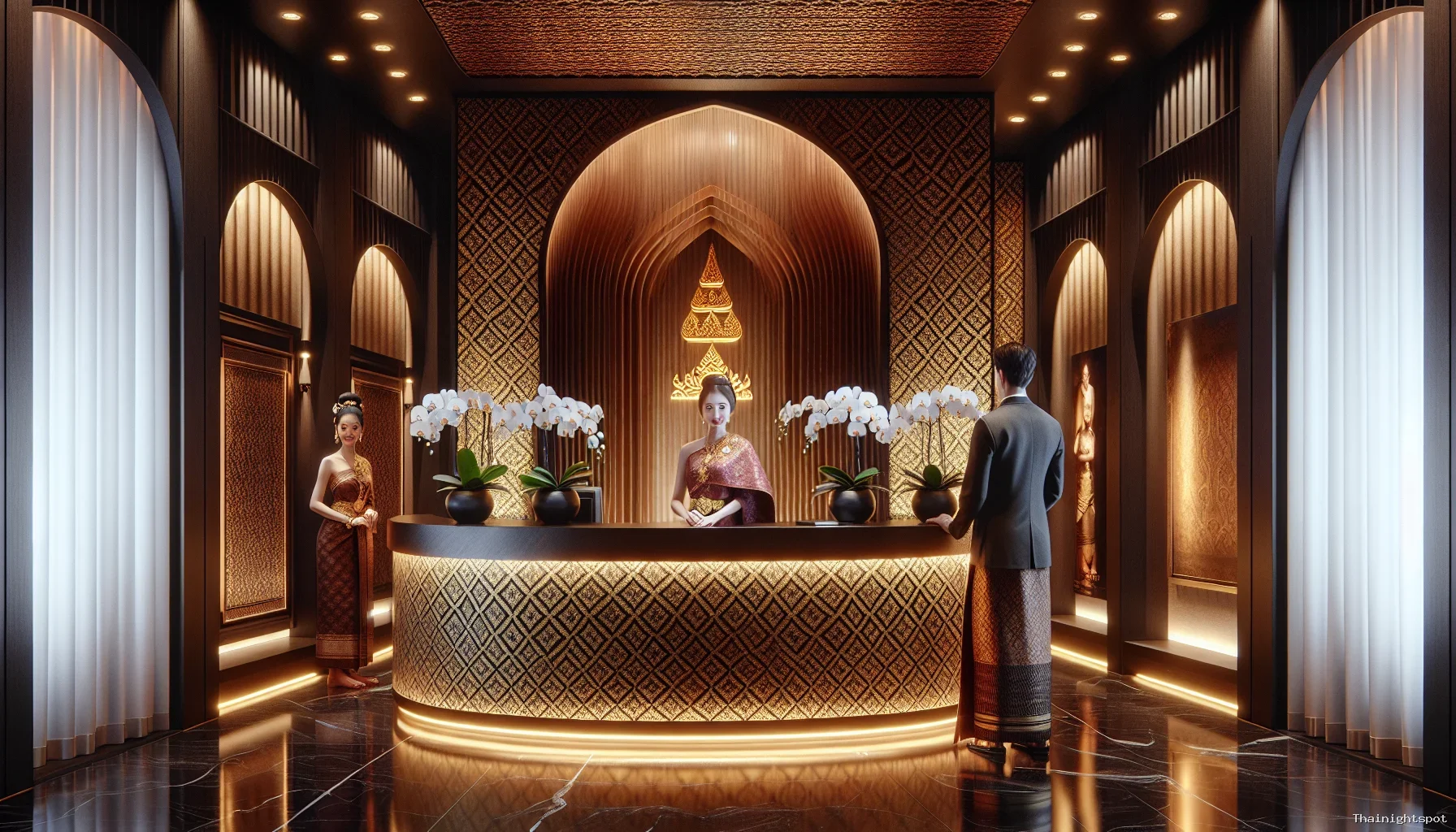
A typical nuru massage session in a Thai venue proceeds as follows. The client is first shown to a private room, which at quality establishments will feature a vinyl-covered mattress area, a shower or bathroom, and a bed. The session begins with a shared shower — the therapist washes the client and herself to ensure cleanliness before the main treatment.
The therapist then prepares the nuru gel, mixing concentrate with warm water to achieve the desired consistency. The gel is applied generously to both the client's body and the therapist's own body. The client lies face-down on the vinyl sheet or air mattress.
The massage itself involves the therapist using her entire body — including chest, stomach, thighs, and buttocks — to glide across the client's body in slow, rhythmic movements. The near-complete absence of friction created by the gel allows for continuous, flowing contact that covers the full length of the body. The therapist will typically alternate between face-down and face-up positions, adjusting pressure and movement patterns throughout.
Sessions typically last 60-90 minutes, with premium packages extending to two hours or more.
Where to Find Nuru Massage in Bangkok
Bangkok's nuru massage venues are concentrated in two main areas:
Sukhumvit corridor: The area between BTS Phrom Phong and BTS Thong Lo stations has the highest concentration of boutique nuru massage venues. Sukhumvit Soi 24 and Soi 33 are particularly well-represented. These establishments tend to be modern, well-appointed, and English-friendly.
Huai Khwang / Ratchadaphisek: Several of the major traditional soapy massage parlours in this area now offer nuru massage alongside their standard menu, allowing clients to choose between or combine the two formats.
Pricing (2026)
Standard nuru massage (60-90 minutes): 2,000-3,500 baht
Premium nuru with VIP room: 3,500-6,000 baht
Nuru + soapy combination: 3,000-5,000 baht
Couples nuru (two therapists): 5,000-10,000 baht
Prices vary significantly by venue quality, therapist selection, and room category. Boutique venues on Sukhumvit tend to charge 20-40% more than comparable services in the Huai Khwang area.
Health and Safety Notes
Nuru gel is water-soluble and generally considered safe for skin contact. Quality establishments use gels that are hypoallergenic and fragrance-free. However, clients with sensitive skin or seaweed allergies should inquire about gel ingredients before the session.
The slippery nature of nuru gel creates a genuine slip hazard — clients should exercise caution when moving between the massage area and the shower. Reputable venues will have non-slip mats and handrails in bathroom areas.
As with all adult massage services in Thailand, the activity exists within a legal gray area under the 1996 Prevention and Suppression of Prostitution Act. Visitors should understand this context and exercise appropriate personal judgment.
Related: Thailand's Massage Industry Overview | Soapy Massage Guide